How do Oahu condo maintenance fees change a buying decision?
Oahu condo maintenance fees do more than add a line to your monthly budget. They reflect how well a building is funded and maintained. A higher fee can reduce how much you qualify to borrow, while a low fee can hide thin reserves that lead to special assessments later. Reviewing the association budget, reserve information, and meeting minutes before you offer is how you see the real cost of ownership.
Key Takeaways
- Hawaii condominium associations must adopt an annual operating budget and establish replacement reserves under Chapter 514B of the Hawaii Revised Statutes.
- State guidance identifies insufficient reserves as a potential cause of special assessments, association borrowing, or deferred repairs, so a low monthly fee is not proof of a lower long-term cost.
- Lenders generally count recurring association dues as part of your monthly housing obligations, so a higher fee can reduce your qualifying purchase price.
- Fees vary widely between Oahu buildings because of elevators, pools, central air-conditioning, seawalls, building age, and insurance, so compare similar buildings rather than island-wide averages.
- The budget, reserve study, meeting minutes, and any notice of an approved or pending special assessment should be reviewed before you make an offer, not after.
What do Oahu condo maintenance fees actually cover?
Maintenance fees, also called regular assessments, are the recurring charges that pay for running the association and, in most projects, for setting money aside for future major repairs. Exactly what's included varies by building, so the governing documents and the association budget control the analysis. The listing description doesn't.
Depending on the project, the fee may reflect:
- Building insurance and routine maintenance
- Utilities or shared services
- Property management
- Contributions to replacement reserves
We tell our buyers to ask what is included and what is not before they compare two buildings. Two condos with similar fees can cover very different things.
Why are fees higher in some Honolulu condos than others?
Fees differ because buildings carry different costs and spread them across a different number of owners. Elevators, pools, central air-conditioning, landscaping, security, parking structures, recreation facilities, seawalls, building age, and insurance all push the budget up or down. A small walk-up and a full-service high-rise are not comparable on fee alone.
That's why an island-wide average tells you very little. Compare a unit against similar buildings, and when you're still deciding where to look, our guide on matching an Oahu neighborhood to your commute, budget and lifestyle helps you narrow the field first.
Can maintenance fees increase after you buy?
Yes. The fee is tied to an annual budget that the association adopts under Chapter 514B of the Hawaii Revised Statutes, so it is not locked in for the life of your ownership. Rising insurance, utility, and repair costs can all show up in the next budget. Looking at how the fee has moved in prior years, along with what the board is discussing, gives you a better read than today's number alone.
How do reserves and special assessments change what a condo really costs?
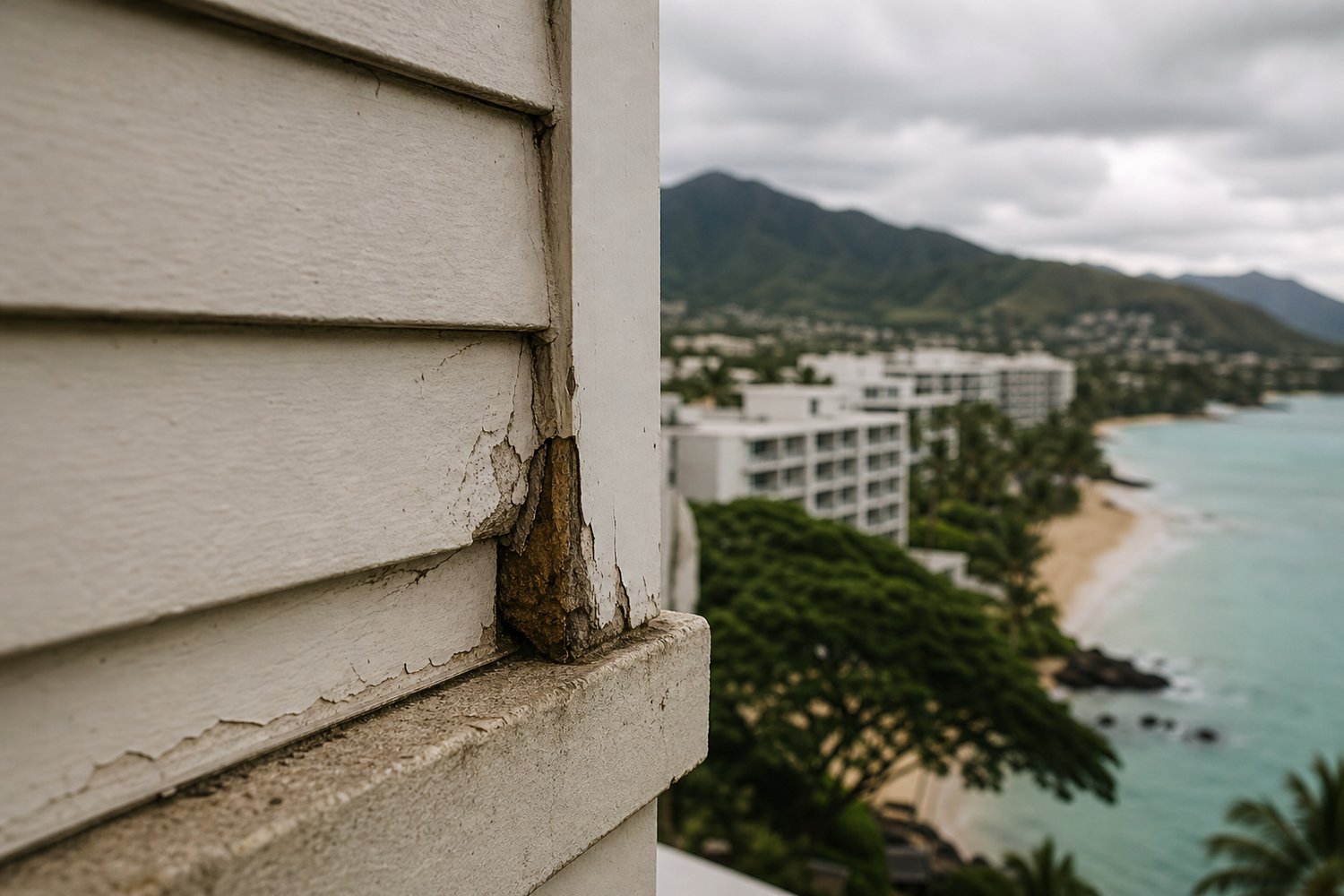
Replacement reserves are money the association sets aside for future repair or replacement of major components, and weak reserves can turn into a bill for you. The Hawaii Department of Commerce and Consumer Affairs explains in its budgeting and reserve funding guidance that reserves are meant for items like roofs, exterior walls, decks, paving, elevators, and equipment. They are separate from routine operating expenses.
The same guidance identifies insufficient reserves as a potential cause of special assessments, association borrowing, or deferred repairs. In plain terms: a low Oahu condo maintenance fee is not automatically a bargain. If an association is under-collecting, the cost doesn't disappear. It gets pushed to a later owner, and that could be you.
What does a healthy reserve picture look like?
You're looking for an association that collects what its own reserve study says it needs. The annual budget under Chapter 514B is required to include information such as the estimated replacement reserves, how those estimates were calculated, the amount to be collected for the fiscal year, and the reserve-funding method or plan, as laid out in the current statute text. Read that section of the budget closely and look for:
- The age and condition of major components
- The estimated replacement schedule
- The funding method the association uses
- Whether actual reserve collections have fallen below the study's recommendations
A building that has been postponing contributions or repairs can show a pleasantly low fee today and a painful one tomorrow.
What is a special assessment, and how can it affect your purchase?
A special assessment is a one-time or short-term charge to owners, on top of the regular fee, to pay for a specific expense the budget didn't cover. It can arrive after closing, and it is not reflected in the asking price. That's why we ask for records of approved, pending, or merely discussed assessments, plus notices about major repairs and any association loans.
Fire and life-safety costs are one area to watch on Oahu. Bills introduced in the 2026 legislative session, such as SB2300 and SB2840, address how reserve studies treat loans or special assessments for fire-safety equipment in qualifying buildings. A bill page is not proof that a measure became law, so we confirm the final status through the Legislature or the DCCA before we advise a client on how it applies to a specific building.
How do high maintenance fees affect financing and resale?
A higher fee generally lowers the price you can qualify for, because lenders treat recurring association dues as part of your monthly housing obligations. The effect is specific to your loan and the project, so we don't hand out a universal formula. Your lender should run your actual numbers.
The building matters to financing too. An association with weak reserves, major deferred maintenance, or a pending assessment can raise separate concerns for a lender or insurer. We steer buyers toward lenders who handle Hawaii condos regularly, because that is where problems with a project surface before you've fallen in love with a unit.
Will high fees hurt resale value?
Not by themselves. Your future buyer will weigh the fee, and also whether it is predictable and supported by adequate reserves. A building with unusually low fees but recurring assessments or visible deferred maintenance can be harder to sell than one with higher, well-supported regular assessments.
Buyers who compete for condos pay close attention to this. We saw it when we helped clients compete for a 2-bedroom condo in Aiea, where the details behind the number mattered as much as the number.
What should you review before making an offer on an Oahu condo?
Ask for the association's current budget, reserve information, meeting minutes, and any records of special assessments before you write the offer, or make your offer subject to that review. Here's what each document tells you:
| Document | What it shows | What to look for |
|---|---|---|
| Current annual budget | What the regular fee pays for and how much goes to reserves | Reserve contributions that look small next to the building's age |
| Reserve study and funding plan | Component ages, replacement schedule, and funding method | Actual collections falling below the study's recommendations |
| Board and owner meeting minutes | Repairs, disputes, and expenses under discussion | Repeated talk of major repairs or fee increases |
| Special assessment records | Approved, pending, or discussed assessments | Any obligation that falls on the next owner |
| Association loan information | Whether the association has borrowed for repairs | Debt that may be repaid through future assessments |
How we use these documents with our clients
Elle and Ryan split the work. One of us reads the budget and reserve pages with you, and the other pulls comparable buildings so you can see whether a fee is high, low, or simply right for what the building provides. That combined view is what keeps you from comparing a unit to the wrong building.
This matters even more if you're buying from afar. Our post on buying on Oahu sight unseen covers how we handle video tours and remote reviews, and the same document review applies to condos. Your escrow officer will handle the closing, but the time to find out about a building's finances is before you're under contract.
Your specific number depends on the building, the unit, and your loan. That's the kind of question we run through with clients before they ever write an offer.
You can read what our clients say about working with us on Google, Zillow, and Realtor.com.
Frequently asked questions
What do Oahu condo maintenance fees usually cover?
They cover the association's recurring costs, which can include insurance, utilities or shared services, management, building maintenance, and contributions to replacement reserves. The exact inclusions vary by project. Check the association budget and governing documents rather than relying on the listing.
How can I tell whether an Oahu condo association has enough reserves?
Compare the reserve study's recommendations against what the association is actually collecting. Look at the age and condition of major components, the replacement schedule, and the funding method. If collections have fallen short or repairs are being put off, expect a higher risk of special assessments.
Can high maintenance fees make it harder to qualify for a mortgage?
Yes, they can. Lenders generally include recurring association dues in your monthly housing obligations, so a higher fee can reduce your qualifying purchasing power. Because the effect depends on your loan and the project, get lender-specific guidance before you shop.
What condo documents should I review before making an offer in Hawaii?
Start with the current annual budget and reserve information, then read the meeting minutes and any records of approved, pending, or discussed special assessments. Also ask about association loans and notices of major repairs. Together they show costs that the asking price does not.
Will high maintenance fees hurt the resale value of an Oahu condo?
Not automatically. Future buyers look at whether the fee is predictable and backed by adequate reserves. A building with a higher, well-supported fee can be easier to sell than one with a low fee, recurring assessments, and visible deferred maintenance.
Ready to look past the monthly number?
The monthly fee is the headline, but the budget, reserves, and assessment history are the story. If you're weighing an Oahu condo, we'll help you pull and read the association documents, compare similar buildings, and connect you with a lender who understands Hawaii projects. Schedule a Free Consultation and we'll look at the building together before you make an offer.
About Elle Zhang
Elle Zhang is a REALTOR® (RA, CRS, CIPS, CLHMS) who, alongside her husband Ryan Lee Sharpe, leads a husband-and-wife luxury real estate team based in Honolulu, Hawaii serving buyers and sellers across Oahu. A Certified Luxury Home Marketing Specialist and Million Dollar Guild member, she has closed over 200 transactions from Kahala and Diamond Head to Kailua and Ko Olina.
eXp Realty · (808) 282-8683
Equal Housing Opportunity. Elle Zhang (RS-66252) and Ryan Sharpe (RS-80162), REALTORS® with eXp Realty (RB-21841), 6600 Kalanianaole Hwy Suite #114, Honolulu, HI 96825. Licensed in Hawaii and regulated by the Hawaii Real Estate Commission. This article is general information, not legal, tax, or financial advice; confirm your own numbers with your escrow officer, tax advisor, or lender.